
All mold originates from outdoors and is part of our natural biome. What matters is whether what’s present inside the home reflects normal fungal ecology. Homes with elevated mold levels or unaddressed moisture issues can experience health concerns and structural damage. Early detection helps homeowners act before problems escalate.
One reliable way to assess elevated mold presence is by collecting a dust sample for ERMI qPCR analysis. This DNA-based testing method identifies mold species in dust and provides an estimate of average exposure.
Understand What ERMI qPCR Testing Involves
ERMI stands for Environmental Relative Moldiness Index. It uses quantitative polymerase chain reaction (qPCR) to detect DNA from 36 mold species: 26 water-damage–associated molds and 10 molds commonly found indoors. The test compares mold levels in your home to a national database, generating a score that indicates relative mold contamination.
Because ERMI qPCR testing relies on dust samples, the quality of the sample directly affects result accuracy. Dust acts as a reservoir for mold spores and fragments, so proper collection is essential. An experienced Indoor Environmental Professional (IEP) or environmental consultant focuses less on the overall score and more on species patterns and individual mold concentrations within the panel.
Before You Sample
ERMI qPCR testing requires a specific dust collection method to ensure consistency:
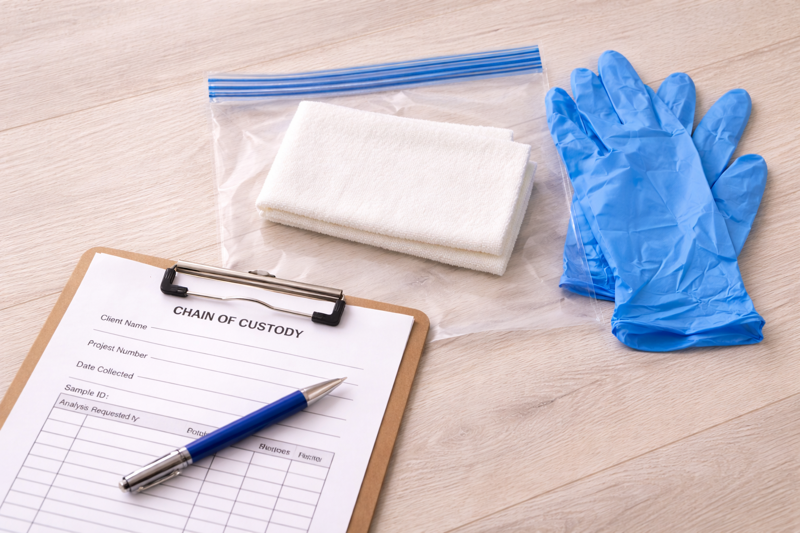
- Use the unscented Swiffer dust cloth supplied in your lab sample kit.
- The cloth should be sterile and capable of trapping fine dust particles.
- Wash hands and use the provided gloves to avoid touching the dust or cloth with bare fingers.
Prepare the Sampling Area Properly
Avoid sampling areas that were recently cleaned or that contain very old dust. Ideally, wait at least 4–6 weeks after cleaning before sampling. During this waiting period, avoid vacuuming and dusting. Consult an IEP or environmental consultant if you need guidance on how to clean prior to sampling.
Keep windows and doors closed during this time. These steps help ensure the collected dust reflects typical indoor mold levels rather than recent cleaning activity or outdoor influences.
Understand Limitations and When to Seek Professional Help
While ERMI qPCR testing provides valuable information, it has limitations:
- It detects mold DNA but does not measure live mold or toxin levels.
- It cannot identify the source of mold growth.
- Results depend heavily on proper sampling technique.
- Certain conditions may result in false positives or negatives.*
An IEP or environmental consultant can help interpret results appropriately. Depending on the situation, hiring a certified mold inspector for an on-site assessment may be the next step. This may include visual inspections, moisture measurements, and targeted sampling (e.g., cavity sampling) to complement ERMI testing.
*The ERMI test is calibrated to estimate mold spore counts by correlating the amount of mold DNA in a sample with the expected number of spores for a given mold species. This technique can produce inaccurate results under certain conditions. For example, false positives may occur if the mold source (fungal body) is directly contacted, because DNA from fungal structures is indistinguishable from DNA originating from spores, leading to an inflated spore count. Conversely, false negatives are particularly concerning because they can mask the presence of mold, creating a misleading sense of safety and potentially delaying further investigation or remediation, and may occur if the qPCR reaction is affected by PCR inhibitors, which can suppress DNA amplification.